
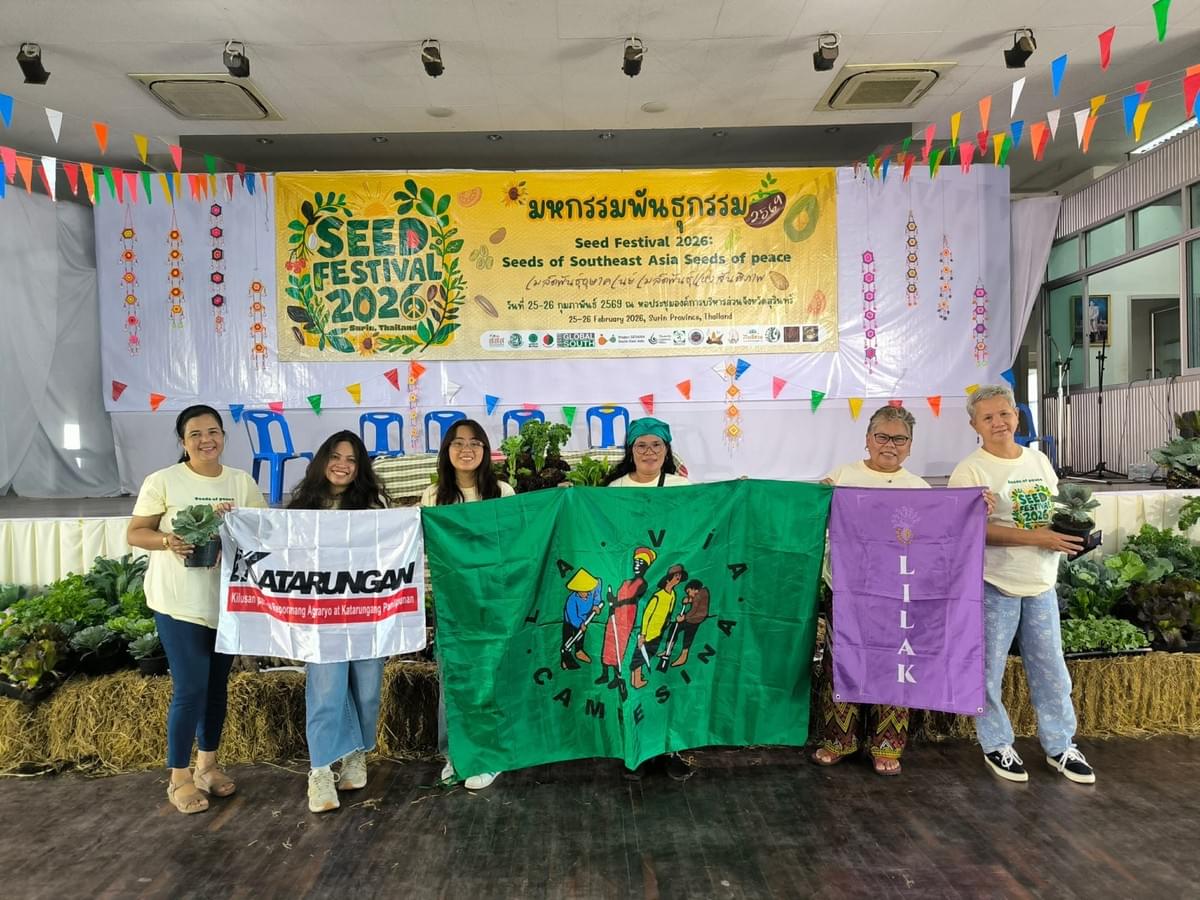
Photo by Mitzi Muros
On the World Food Day, Elmalyn Abatayo, an Erumanen ne Menuvu woman from Cotabato, reflects on her participation in the Seeds of Peace Convention held in Surin, Thailand last February 22-29, 2026.
Elmalyn Abatayo, one of the indigenous women participants representing the Indigenous Women’s Farmers Working Group of LILAK Purple Action for Indigenous Women’s Rights, shared that the highlight of the event for her was the exchange of different seeds among the participating countries. This initiative aims to sustain and preserve the disappearing food crops and seeds of the communities.
“The global climate crisis has affected farming practices of indigenous women and our communities. The exchange helps our communities promote our indigenous seeds, far from what corporations are pushing through market-driven agriculture,” said Abatayo.
According to Abatayo, the Philippines is blessed with diverse indigenous cultures, and their Indigenous Knowledge, Systems, and Practices informs their farming practices. She said that promoting and supporting these initiatives is crucial to sustaining their culture.
The 2026 gathering promoted a broader learning exchange, as well as strengthened connections among farmers and peasants coming from Burma, Thailand, Vietnam, Laos and the Philippines.
The Seed Festival has welcomed peasants and farmers from Alternative Agriculture networks in Mekong countries since 2025. These networks have been working together for several years and formed a collaborative platform, “Southeast Asian Seed Network,” serving as a platform for exchange and reaching wider audiences and networks, facilitating cross-border dialogues aimed towards mutual awareness and contextual understanding at the regional level.
Abatayo re-echoed the knowledge she gained with the Indigenous Women Farmers Working Group upon returning to the Philippines. Some of the practices inspired other indigenous women farmers to replicate the seed exchange in their own indigenous communities.
###